Prishtina HUB: A Local Space with Global Conversations
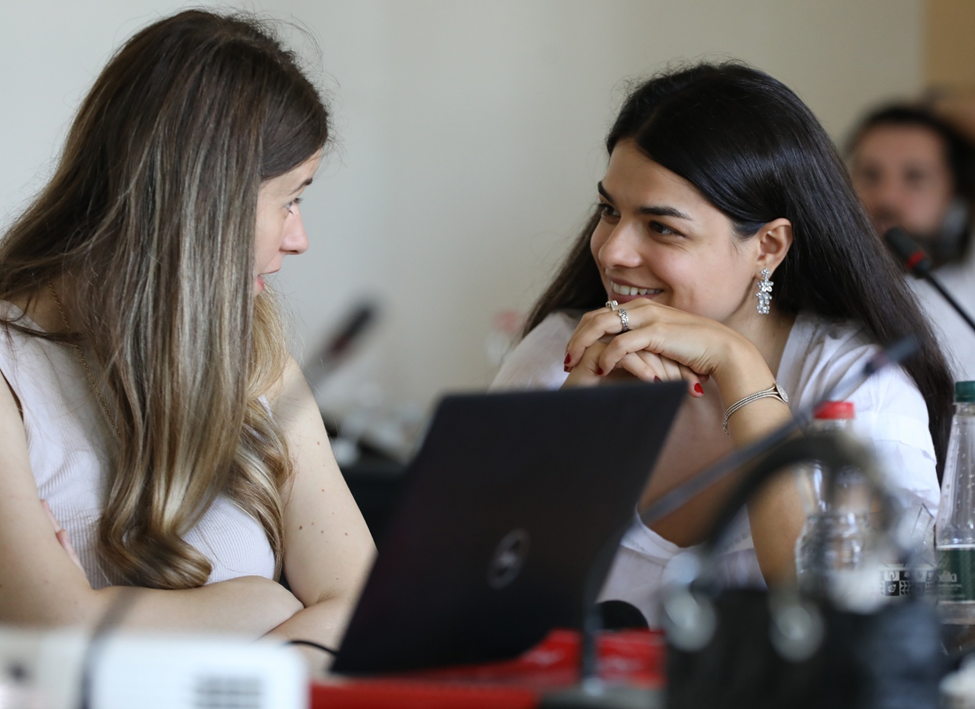
In mid-August 2026, two rooms at the National Institute of Public Health of Kosovo (NIPHK) hosted a small group of health professionals working and learning together. For six days, from 17 to 22 of August, 25 participants gathered to attend the courses of SSPH+ Lugano Summer School in Public Health through Prishtina HUB. The program brought together epidemiologists, nurses, nutritionists, and public health specialists to explore global approaches and reflect on how they could be adapted to Kosovo’s evolving needs.
Among them was Elinë Sylaj, who reflected on the experience, saying, “I learned a great deal and came away with knowledge and practical tools that I will definitely use in my academic work.”
From a One-Time Solution to a Sustainable Model
The Prishtina HUB was first established in 2020, when the pandemic abruptly halted international travel. Rather than pausing, the Accessible Quality Healthcare (AQH) Project helped assemble a group of Kosovar participants who joined the Lugano Summer School remotely.
What began as an improvisation quickly grew into something far more enduring. For six consecutive years, the Prishtina HUB has allowed Kosovo’s public health professionals to participate locally while remaining connected to global peers and experts, a concept so effective that by 2025 it had expanded into eight HUBs worldwide.
“In 2020, Kosovo became the first HUB location of the SSPH+,” said Prof. Dr. L. Suzanne Suggs, Chair of the SSPH+ Summer School in Public Health Policy, Economics, and Management. “Thanks to that amazing to that initiative we have scaled the HUB concept, in 2025 we had 8 locations with over 94 participate in those countries.”
HUBs, she added, “allow people to come together locally and at the same time connect globally. They create space to discuss local needs, how systems work, and how they can be improved.”
Now in its 35th edition, the SSPH+ Lugano Summer School brings together public health professionals to bridge the gap between theory and practice in policy, economics, and management. Over 2,000 participants have taken part since its founding, in Lugano and, since 2020, through HUBs and online participation.
For NIPHK, hosting the HUB has delivered more than cost savings. It has strengthened local expertise, increased visibility in regional networks, and offered a rare space where professionals from different backgrounds can think together.
“Participants had the opportunity to hear new experiences, exchange knowledge, and think about how they can implement global practices in our context…The good thing about these courses is that the problem of travel and the expenses associated with it has been eliminated,” noted Ardita Baraku, Executive Director of NIPHK.
Since being transferred to NIPHK in 2024, with the continued support of the AQH and HIS Projects, the Prishtina HUB has become an important piece of the country’s professional development landscape, one the Institute hopes to sustain beyond the AQH Project’s final phase. Baraku from NIPHK, underlined that sustaining the Prishtina HUB remains a priority, one that will require creative financing, including potential government support, university partnerships, or arrangements with SSPH+ for reduced online participation fees.
Across the years, 98 participants have passed through the HUB, each carrying forward new skills and perspectives into their work. Participants speak of gaining confidence in areas like digital health, air quality, nutrition, epidemiology, and prevention; of applying evidence-based approaches in policy discussions; and of seeing how global practices can be re-imagined for Kosovo’s context. For nurses, it has offered pathways to improve patient care; for public health officials, tools to address NCDs. One participant from Albania even joined this year, citing the convenience of Prishtina HUB.
“This initiative has been very well received,” said Merita Shehu, Senior Health Specialist at AQH. “Participants had the opportunity to gain knowledge, work in groups, socialize, and apply what they learned in their daily work.”
Epidemiologist Besfor Kryeziu, who attended both the fully online version and later the HUB, said the in-person model transformed the experience. “Prishtina HUB was a slightly more special experience since we had the opportunity to interact and connect with other professionals in similar fields.” What he learned, he added, has been directly applicable in his work on air quality and health statistics.
What began as a temporary workaround during a global crisis has become a steady investment in Kosovo’s future public health capacities. As long as the HUB continues to bring people together, to learn, reflect, and challenge one another, it will remain essential to strengthening the country’s path toward more resilient and equitable healthcare.
Impressions from participants can be watched here.